
Essential details
MOQ:120
Shipping:Ocean freight
Product Introduction
Why SPC Flooring Offers Both B1 Fire Rating & Full Waterproofing – A Detailed Technical Explanation
1. What is SPC Flooring?
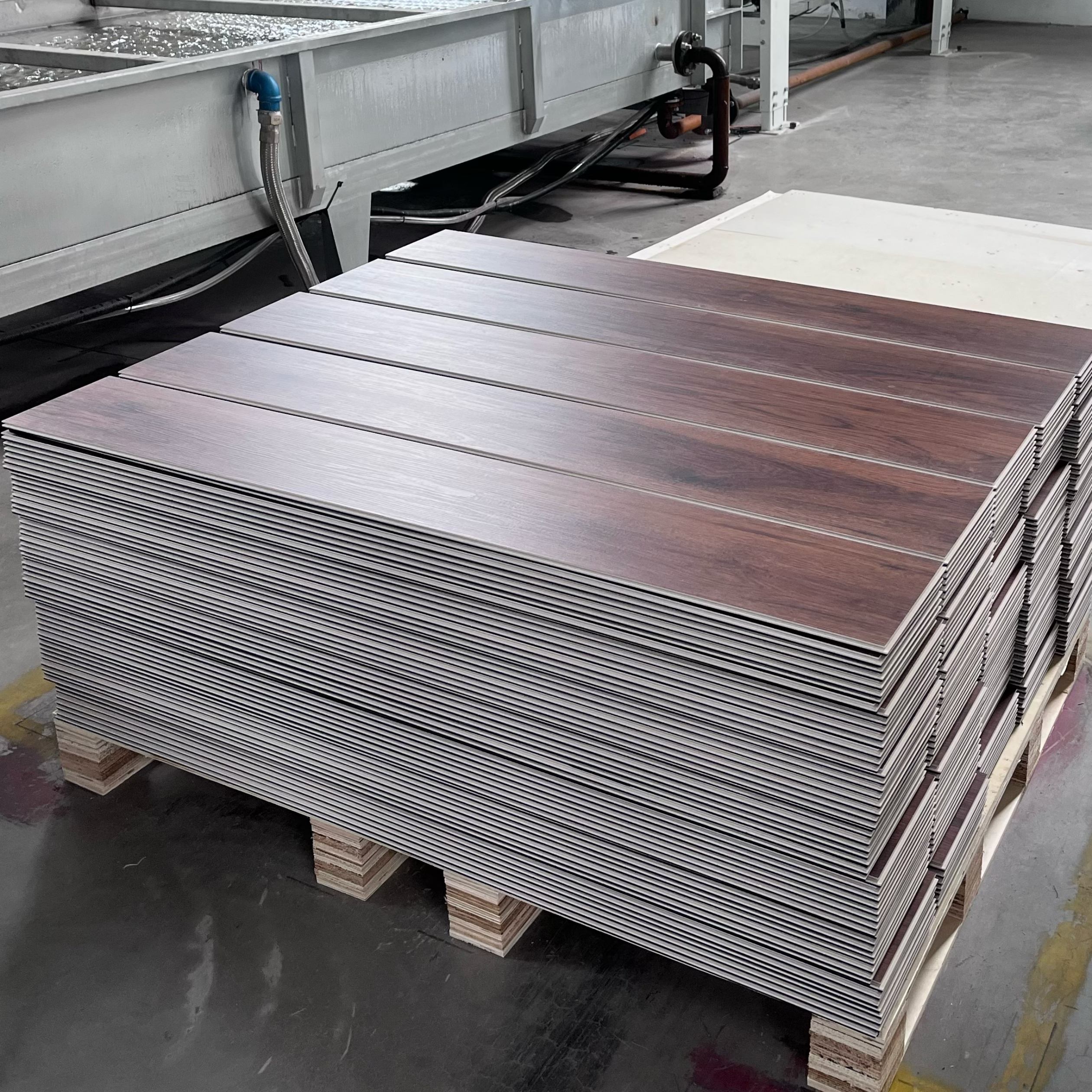
SPC stands for Stone Plastic Composite (sometimes called Rigid Core Vinyl).
1. What is SPC Flooring?
SPC stands for Stone Plastic Composite (sometimes called Rigid Core Vinyl).
It is manufactured by mixing:
50–60%+ limestone / calcium carbonate powder (the "stone")
PVC resin + stabilizers (the "plastic")
Small amounts of lubricants and impact modifiers
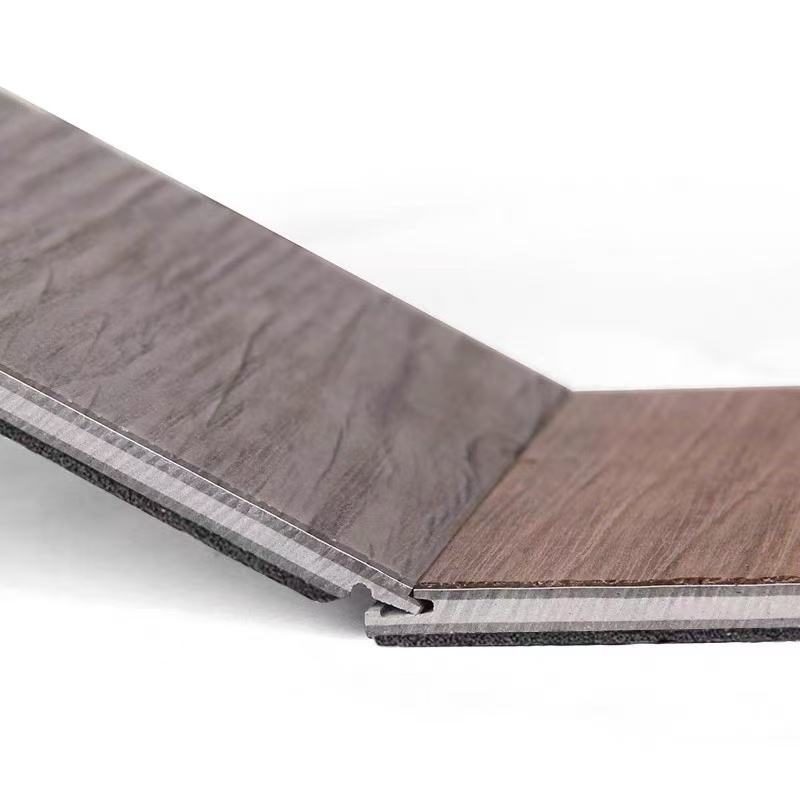
These materials are subjected to high temperature (around 120–180°C) and high pressure to form a dense, rigid, homogeneous core layer. Unlike traditional wood flooring, SPC contains zero wood fibers.
2. Detailed Explanation of B1 Fire Rating
What does B1 mean?
Under the European standard EN 13501‑1 (or Chinese standard GB 8624), building materials are classified as:
What does B1 mean?
Under the European standard EN 13501‑1 (or Chinese standard GB 8624), building materials are classified as:
Class Description
A Non‑combustible (stone, concrete, steel)
B1 Difficult to ignite – self‑extinguishing, low heat release
B2 Normal combustibility (wood, laminate, ordinary vinyl)
B3 Easy to ignite (curtains, loose paper)
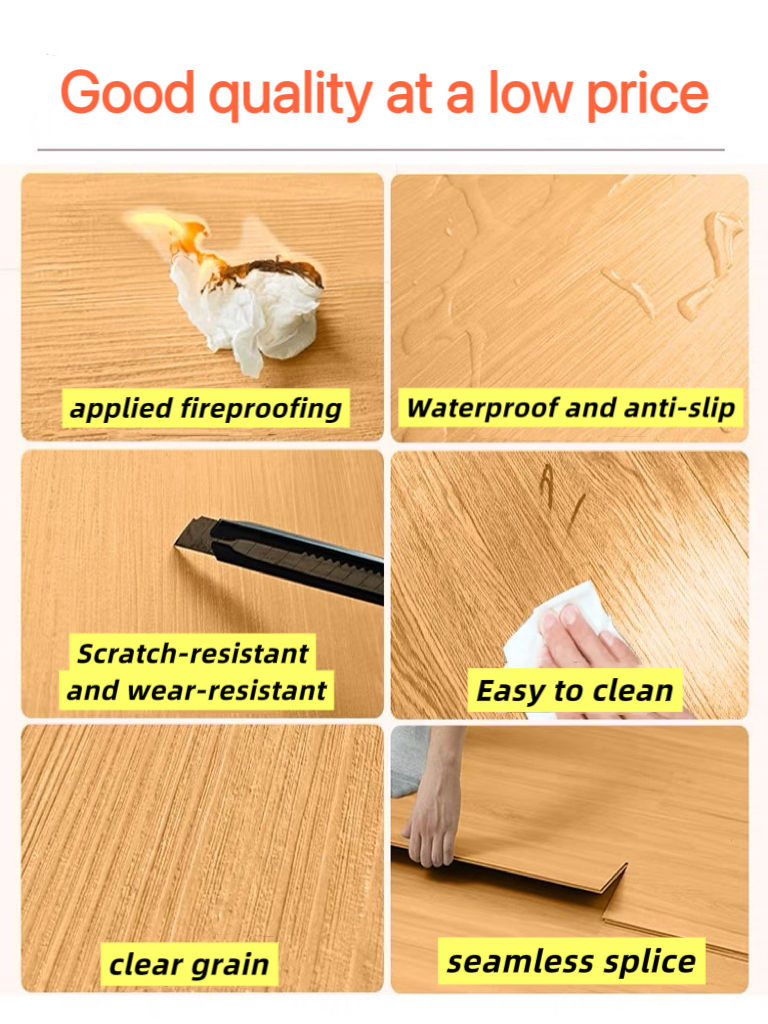
SPC flooring is rated B1 – which means it belongs to the flame‑retardant building materials category.
A Non‑combustible (stone, concrete, steel)
B1 Difficult to ignite – self‑extinguishing, low heat release
B2 Normal combustibility (wood, laminate, ordinary vinyl)
B3 Easy to ignite (curtains, loose paper)
SPC flooring is rated B1 – which means it belongs to the flame‑retardant building materials category.
Why does SPC achieve B1?
A. High mineral content (limestone)
A. High mineral content (limestone)
Calcium carbonate (CaCO₃) is naturally non‑combustible.
When heated, it absorbs large amounts of energy (endothermic decomposition) and releases carbon dioxide, which helps dilute oxygen around the flame – a natural fire‑suppressing effect.
B. Low organic content
Only ~30–40% of SPC is plastic (PVC resin). The rest is stone.
The organic (combustible) portion is significantly lower than in wood flooring (100% organic) or laminate flooring (70% organic).
C. Self‑extinguishing behavior
If a flame is applied, the plastic portion may soften or char slightly.
As soon as the flame is removed, the high stone content and internal chemistry stop the fire within seconds – typically less than 5 seconds.
D. Low smoke production
High‑quality SPC formulations use special smoke suppressants (e.g., zinc borate, magnesium hydroxide).
Compared to ordinary PVC products, SPC produces far less dense black smoke and fewer toxic gases (like hydrogen chloride).
Official test criteria for B1 rating:
To pass B1 certification, SPC flooring must meet strict values:
To pass B1 certification, SPC flooring must meet strict values:
Parameter Requirement
Ignitability No sustained flaming after flame application
Heat release rate (FIGRA) ≤ 250 W/s
Total heat release (THR600s) ≤ 15 MJ
Smoke production (TSP600s) ≤ 200 m²
Flaming droplets/particles None within 600 seconds
SPC flooring consistently passes these tests due to its stone‑based composition.
Ignitability No sustained flaming after flame application
Heat release rate (FIGRA) ≤ 250 W/s
Total heat release (THR600s) ≤ 15 MJ
Smoke production (TSP600s) ≤ 200 m²
Flaming droplets/particles None within 600 seconds
SPC flooring consistently passes these tests due to its stone‑based composition.
3. Detailed Explanation of 100% Waterproof
What does "100% waterproof" actually mean?
It means the flooring does not absorb water or swell – even when fully submerged for days or weeks.
What does "100% waterproof" actually mean?
It means the flooring does not absorb water or swell – even when fully submerged for days or weeks.
Why is SPC completely waterproof?
A. Zero hygroscopic materials
A. Zero hygroscopic materials
Limestone powder has no affinity for water (hydrophobic mineral).
PVC resin is also hydrophobic – water molecules cannot bond with its molecular structure.
No wood, no cellulose, no natural fibers – none of the materials that cause swelling.
B. Extremely low water absorption rate
Professional testing (ASTM D570 or ISO 62) shows SPC has water absorption ≤ 0.1% (often as low as 0.02%).
For comparison:
Solid hardwood: 6–12% (swells badly)
Laminate (HDF core): 15–25% (swells and disintegrates)
WPC vinyl: ~1–2% (slightly absorbs moisture)
C. Zero thickness swelling
The key metric is thickness swelling rate after 24‑hour immersion.
Standard requirement for waterproof flooring: ≤ 0.5%
SPC achieves 0.0% – literally zero measurable expansion.
D. Dimensional stability
Many floors "cup," "crown," or "curl" when moisture attacks the edges.
Because SPC is homogeneous (same material throughout the cross‑section), moisture cannot enter from any direction.
Result: no edge swelling, no buckling, no delamination.
E. Mold and bacteria resistance
Mold requires three things: moisture, organic matter, and warm temperature.
SPC provides no moisture absorption + no organic food source (stone and plastic are inorganic).
Therefore: mold, mildew, and rot are impossible inside the flooring material.
Suitable installation areas (unlike wood):
Because of 100% waterproofing, SPC can be installed in:
Because of 100% waterproofing, SPC can be installed in:
Area Traditional wood/laminate SPC flooring
Dry living room ✅ OK ✅ OK
Bathroom ❌ high risk ✅ completely safe
Kitchen (near sink) ❌ risk of spills ✅ safe
Basement ❌ humidity damage ✅ safe
Laundry room ❌ possible leaks ✅ safe
Mudroom ❌ water tracking ✅ safe
Sunroom (humidity changes) ❌ swelling/shrinking ✅ stable
4. How Both Properties Coexist – The Unique Advantage
Most flooring types have to sacrifice one property for the other:
Dry living room ✅ OK ✅ OK
Bathroom ❌ high risk ✅ completely safe
Kitchen (near sink) ❌ risk of spills ✅ safe
Basement ❌ humidity damage ✅ safe
Laundry room ❌ possible leaks ✅ safe
Mudroom ❌ water tracking ✅ safe
Sunroom (humidity changes) ❌ swelling/shrinking ✅ stable
4. How Both Properties Coexist – The Unique Advantage
Most flooring types have to sacrifice one property for the other:
Floor type Fire rating Waterproof? Key limitation
Hardwood (solid/engineered) B2 (combustible) ❌ No Burns + swells
Laminate (HDF core) B2 (combustible) ❌ No (surface only slight resistance) Burns + swells
Luxury Vinyl Tile (LVT) Possibly B1/B2 depending on formula ✅ Yes (if no fiberglass) Softer, less rigid
SPC B1 (difficult to ignite) ✅ 100% waterproof No compromise needed
Ceramic/Porcelain tile A (non‑combustible) ✅ 100% waterproof Cold, hard, grout cleaning
SPC is the only rigid flooring type that naturally combines B1 fire safety with full waterproofing without requiring special coatings or treatments.
Hardwood (solid/engineered) B2 (combustible) ❌ No Burns + swells
Laminate (HDF core) B2 (combustible) ❌ No (surface only slight resistance) Burns + swells
Luxury Vinyl Tile (LVT) Possibly B1/B2 depending on formula ✅ Yes (if no fiberglass) Softer, less rigid
SPC B1 (difficult to ignite) ✅ 100% waterproof No compromise needed
Ceramic/Porcelain tile A (non‑combustible) ✅ 100% waterproof Cold, hard, grout cleaning
SPC is the only rigid flooring type that naturally combines B1 fire safety with full waterproofing without requiring special coatings or treatments.
5. Summary – Technical Takeaway
Property Why SPC Achieves It
B1 fire rating 50‑60%+ limestone powder acts as natural flame retardant + endothermic cooling + CO₂ release + self‑extinguishing chemistry
100% waterproof Composed entirely of hydrophobic (water‑repelling) materials – no wood, no cellulose, zero absorption, zero thickness swelling
6. Important Note – Quality Matters
Not all SPC flooring is the same. To reliably achieve both B1 and full waterproofing, you need:
Property Why SPC Achieves It
B1 fire rating 50‑60%+ limestone powder acts as natural flame retardant + endothermic cooling + CO₂ release + self‑extinguishing chemistry
100% waterproof Composed entirely of hydrophobic (water‑repelling) materials – no wood, no cellulose, zero absorption, zero thickness swelling
6. Important Note – Quality Matters
Not all SPC flooring is the same. To reliably achieve both B1 and full waterproofing, you need:
High‑quality limestone powder (fine particle size, pure source)
Correct PVC‑to‑stone ratio (not overloaded with cheap plastic fillers)
Proper stabilizers and smoke suppressants (especially for B1 certification)
Certification test reports from a recognized third‑party lab (e.g., SGS, TÜV, Intertek, or national test centers like NFTC)
Always ask the supplier for:
B1 fire test report (showing specific values like FIGRA, THR600s, smoke production)
Water absorption test report (showing ≤ 0.1% and thickness swelling = 0%)
Final Conclusion
SPC flooring achieves B1 fire rating and 100% waterproofing because it is essentially a "stone‑plastic composite" – inheriting the fire resistance of stone and the moisture resistance of plastic. No other rigid flooring type offers this combination naturally.
SPC flooring achieves B1 fire rating and 100% waterproofing because it is essentially a "stone‑plastic composite" – inheriting the fire resistance of stone and the moisture resistance of plastic. No other rigid flooring type offers this combination naturally.